


Uncategorized

Smart Money is Chasing Real Estate – Lawrence Yun, NAR Chief Economist

“A huge volume of cash sales, supported by the recovery in the stock market, shows that smart money is chasing real estate,” according to Lawrence Yun, Chief Economist with the National Association of Realtors (NAR).

A recent report from economists at NAR indicates that both REO Sales and Short Sales are expected to continue on an “upward, albeit uneven, track through this year and next…” Yun provides a positive forecast for distressed property sales for the remainder of this year and next, projecting 5.3 million existing home sales this year, up from 4.9 million in 2010.  He expects 2012 sales of about 5.6 million.

Yun indicates the current makeup of buyers shows “sizable pent-up demand” from those characterized as traditional buyers who need mortgage financing in order to purchase a home.  Yun projected if mortgage standards/credit requirements were “returned to normal, safe standards,” home sales will expand by 15 percent to 20 percent.

Review the forecast and study results, and then let us know if you agree with these assessments and forecasts in your marketplace.
Distressed Property Sales Up Over Prior Quarter

Distressed properties in the first quarter sold at a pace 8.3 percent higher than during the previous quarter.  A recent study by the National Association of Realtors reported that previously owned homes sold at the annual rate of 5.14 million units during the first quarter of 2011, an impressive 8.3 percent growth quarter-over-quarter.
Sales of distressed properties (REO and Short Sales) as a percentage of total market sales grew from 36 percent the prior year to 39 percent by quarter’s end.  The trend was recorded in 49 of 50 states and includes the District of Columbia.  The State of Vermont was the “outlier” with a reported 7.1 percent decline in sales of existing homes.

Average home prices declined from $166,400 in Q1 of 2010, to $158,700 in Q1 of 2011. The 4.6 percent price decline has sparked an uptick in sales.

The mix of home buyers included these categories:  repeat buyers, 47 percent; first-time home buyers, 32 percent; and investors, 21 percent.  The presence of “cash purchasers” grew from 27 percent to 33 percent quarter-over-quarter.

The Most Affordable Homes in America: Top 10 Bargain Cities for Homebuyers

You have no doubt heard it said that cities with the fastest price appreciation are now the cities with the greatest deflation in home prices.  This holds true for many of the cities in the list below.  For example, Atlanta, GA “led the nation in new construction during the 10 year run-up before the bubble burst;” according to a newly released report by Deutsche Bank.  Atlanta, Georgia now has the “most affordable homes in America.”
Huge Advantages to Purchase vs. Rent

The study shows Atlantans who rent are now paying 151 % more per month than they could be paying if they purchased the equivalent property.  The median home price in Atlanta declined by 33% during the 2006-2010 housing crisis.  February 2011 sales indicate an additional 14% price drop versus the previous year.

Top 10 Best Cities for Homebuyers

1.      Atlanta, GA

2.      Orlando, FL

3.      Rochester, NY

4.      Cleveland, OH

5.      Tampa-St. Petersburg, FL

6.      Las Vegas, NV

7.      Jacksonville, FL

8.      St. Louis, MO

9.      Buffalo, NY

10.   Memphis, TN

Quality Report

There are many “Top 10” reports that leave us scratching our heads, but this report provides thorough documentation on how each city earned its spot on the list.  It also assesses how much money is being “left on the table” by those who choose to ‘rent vs. buy’ in each market.  This is a great time to ensure the rent versus buy statistics are part of our marketing efforts.

HUD-Owned Home Perks

Remember that qualified FHA borrowers (owner occupants) can close with only 3.5% down. Better still, some markets feature the “$100 Down Payment” program.  Ask your real estate professional for details. And last but not least, most FHA mortgages are assumable loans—which can be a huge future selling advantage if interest rates continue to climb. Check with your Lender for details.

Visit our website for more information about available properties or about buying and selling affordable homes.

Fannie Mae’s Energy Improvement Program

While it’s no secret that gas prices have escalated, less has been said about escalating housing costs in the form of high utility bills.  If you have wished for a way to reduce monthly energy bills — a new Fannie Mae energy improvement mortgage add-on program may be the answer you’ve been looking for.
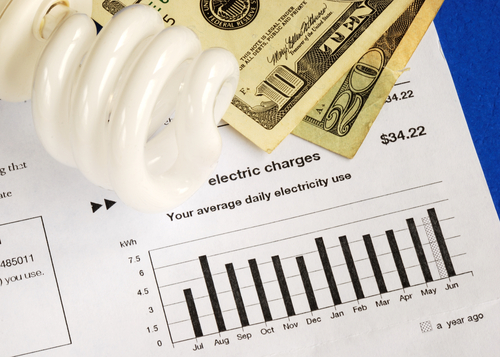
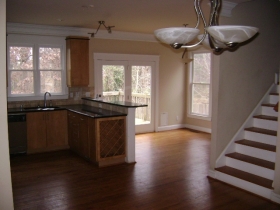

Fannie Mae’s new energy improvement feature can be used to make energy improvements to existing homes. For qualified applicants, instead of offering a separate loan/mortgage for energy upgrades or retrofits alone, Fannie Mae’s new program  feature allows the upgrade of an existing home through a purchase or re-finance mortgage at current interest rates. It alleviates the need for two separate mortgages/loans.  The principal can be repaid with the energy savings generated by the improvements.

It folds the cost of the improvements capped at up to 10 percent of the estimated market value of the home– following the energy efficiency enhancements—into the mortgage amount itself. The new program is available through participating lenders across the country.  The program requires an energy audit by a certified Home Energy Rating Systems (HERS) specialist.  The audit is to ensure that the proposed energy upgrades are legitimate and truly cost-justifiable.

The features of the new Fannie Mae product are:

The financing of energy improvements found by a RESNET Home Energy Rating to be cost-effective of up to 10% of the as-completed appraisal.  This amount is subject to standard Fannie Mae LTV, CLV and HCLTV ratios.

  • The cost of the home energy rating can be included as the cost of the energy improvements.
  • Appraisers will be responsible to determine the as-completed value of the home based upon the energy improvements that were made.
  • Appraisers will also be responsible for verification that the energy improvements being financed were completed.
  • Only single family homes qualify.
  • Manufactured houses and cooperative units are not eligible.


HUD’S “PowerSaver Program” Makes Energy Upgrades Affordable

The U.S. Department of Housing & Urban Development (HUD) Secretary Shaun Donovan has announced a new energy upgrade program that offers creditworthy borrowers low-cost loans to finance energy improvements on
homes. The loans will be backed by the Federal Housing Administration (FHA). Under the program, qualified borrowers will be able to finance up to $25,000 in energy efficiency upgrades on a primary residence.
Energy Mortgages – The New Thing is Going GreenEnergy Cost
The announcement highlights the emergence of a new category of mortgage loans, referred to as ‘Energy Mortgages.’ Other major governmental entities have launched their own versions of ‘energy mortgages.’ Some target existing primary residences; others are for homes about to be purchased as primary residences. HUD’s program applies only to principal residences that are detached and single-family homes. PowerSaver offers preferential terms and “most participating lenders are expected to encourage owners to sign up for an energy efficiency analysis by a certified specialist.” The energy audit should help to document the projected amount of potential monthly savings.
More Details
The ‘energy audit’ should demonstrate a potential monthly energy savings sufficient to repay the amount of the loan. Borrowers must demonstrate creditworthiness. Qualifications include a minimum FICO score of “660,” and a debt-to-income ratio below 45 percent. Interest rates are currently between 5 percent and 7 percent, with up to a 20-year repayment period.
Positive Impact
It is estimated that the program will assist 30,000 homeowners and create 3,000 jobs. Many qualifying homeowners may see this as great way to lower energy bills and repay the loan with the savings earned.
Approved Lenders
Eighteen lenders have been selected to participate in the FHA “PowerSaver” pilot program. Click here for a FHA’s “PowerSaver” fact sheet.

Accelerate Your Business By Successfully Selling HUD Homes!

Are you interested in ramping up your business in 2011? The Federal Housing Administration (HUD) has one of the largest portfolios of affordable housing in the country. For savvy Realtors®, this represents a tremendous opportunity.
Join us for a FREE SEMINAR entitled “Successfully Selling HUD Homes.” Come and learn how to accelerate and re-energize your business while “Getting America’s Homeownership Back on the Road”.  The seminar will be held on Sunday, June 12, 2011 at the Omni Hotel in downtown Fort Worth, Texas. Registration for the REO course precedes this year’s REO- Expo, which begins June, 13. Attending the Expo is not required for “Successfully Selling HUD Homes” registration and attendance. The workshop will be hosted by HomeTelos and taught by nationally recognized instructor Margo McKay- Broughton, who has trained over 50,000 agents in 26 states. The course is comprehensive and will highlight latest updates from HUD and HomeTelos, HUD’s Asset Manager Contractor.
Join us for a high-energy, interactive seminar that can help to propel your business to the next level. Limited seating so register today! While attendance at REO Expo is not required to participate in this training, the planners of the conference have agreed to extend a $100 early registration discount until Tuesday, May 10th to those who do choose to attend. To get this discount, please use code HWFP when registering for the Expo.

The Most Affordable Homes in America: Top 10 Bargain Cities for Home Buyers

You have no doubt heard it said that cities with the fastest price appreciation are now the cities with the greatest deflation in home prices.  This holds true for many of the cities in the list below.  For example, Atlanta, Ga., “led the nation in new construction during the 10- year run-up before the bubble burst;” according to a recently released report by Deutsche Bank.  Atlanta now has the “most affordable homes in America.”


Huge Advantage to Purchase vs. Rent

The study shows Atlantans who rent are now paying 151% more per month than they could be paying if they purchased the equivalent property.  The median home price in Atlanta declined by 33% during the 2006-2010 housing crisis.  February 2011 sales indicate an additional 14% price drop versus the previous year.

Top 10 Best Cities For Homebuyers

  1. Atlanta, GA
  2. Orlando, FL
  3. Rochester, NY
  4. Cleveland, OH
  5. Tampa-St. Petersburg, FL
  6. Las Vegas, NV
  7. Jacksonville, FL
  8. St. Louis, MO
  9. Buffalo, NY
  10. Memphis, TN

Quality Report

There are many “Top 10” reports that leave us scratching our heads, but this report provides thorough documentation regarding how each city earned its spot on the list.  It also assesses how much money is being “left on the table” by those who choose to ‘rent versus buy’ in each market.  This is a great time to ensure the rent-versus-buy statistics are part of our marketing efforts.

Added Incentive

Brokers and owner occupant buyers should visit www.homepath.com for details on the 3.5% home buyer incentive from Fannie Mae.  It’s nationwide.  Check the details to see if your dream home purchase qualifies.

Visit our website for more information about buying and selling homes of every style, size and price range.

HUD Launches National Fair Housing Month

The Housing Agency has announced National Fair Housing Month, a national media campaign with the theme of fair housing rights and responsibilities. Throughout the month of April the agency will engage in a series of community dialogues on a range of related topics.

Recently 108 nonprofits and fair housing agencies were awarded $41 million to educate the public and to work to prevent housing discrimination in mortgage lending, rental and sales practices. Many of the agencies will “test” real estate related professionals and/or landlords to insure that their business practices meet mandatory standards.  Others will investigate housing complaints and educate the public.

The education of immigrants and society in general is a major goal.  HUD conducted its first “Immigrant Housing Conference” in Omaha, Nebraska on April 14th.

The “Live Free” campaign will begin with print media. The goal of the campaign is to emphasize the importance of ensuring fair treatment of those in “protected classes.”  This year’s focus will be the prevention of discriminatory practices based on “national origin.”

Neighborhood listing brokers, this would be an excellent time for real estate professionals on your team to huddle to ensure that all team members are current and in compliance with  Fair Housing legislation as it relates to the practice of real estate. It’s central to best practices, it is good for business and it is the law.

Read more about grant awardees and their specialty functions and this month’s “Live Free” campaign.

QR Codes: Helping Sell Real Estate

QR codes have been around for a while now — a Toyota subsidiary created them in 1994. They are now making a big splash in the U.S. and in the world of residential real estate marketing.

First Preston Listing Brokers tell us they use QR codes as a key tool in their marketing strategies. Brokers are using codes on business cards, yard signs, websites, etc.  With an oversized QR Code on a yard sign, a prospective buyer can scan the code from the car and take a virtual tour on their smart phone.  Some brokers use them to provide profiles of similar properties in the area to increase the odds the prospect may find a property they want to purchase and contact the agent.

What’s a QR Code?

According to PCMag.com Encyclopedia, a “Quick Response [QR] Code is a “two-dimensional matrix bar code that is used to identify products. QR codes are increasingly used to identify the URL of a company’s Website so that mobile phone users can photograph the code and retrieve information about the organization.”

What Advantage Do They Offer Me?

This medium gives you a way to get the prospect to put your website, virtual tour and/or contact information into the memory of the buyer’s phone with one simple scan.

Smart phone or Android users simply download a (free) reader, scan the codes and connect to video, text, URLs, photos, demos, virtual tours, etc. Retailers attach demo codes to products to answer product questions. Products with codes demo themselves.   Retailers that generate QR codes can also track usage and location information about specific inquiries.

According to a NAR survey, the age of the typical first time home buyer is 24-31. They are tech savvy and appreciate useful innovation.  QR Codes are a great way to capture their attention.

HomeTelos Using QR Codes for Marketing

As of March 31st, 2011, fliers generated via the HomeTelos Marketing Detail screen, include QR codes. A prospective buyer can scan the property profile, store it, share it and replay it at will.

Let us know what you think of this exciting technology tool!  Enjoy decoding the QR code in this article.

10 “Hot Markets” for Buying and Investing in 2011

There are ten hot markets for buying that might surprise you, and if you are thinking about buying, you should give these markets some serious consideration.

Inman News recently took a comprehensive look at market performance across the nation.  They worked with other research firms to compile a series of reports on residential real estate. One of the featured sections was a report—produced by RealtyTrac. It spotlighted their ‘picks’ for the “Top 10 U.S. Markets for Buying and Investing in 2011.”

The RealtyTrac methodology reviewed the nation’s largest 100 metropolitan statistical areas. Analysts filtered out the top 25 cities based on 10 key performance metrics.  The cities which showed up most frequently in multiple categories– made the final cut. The defining categories included foreclosure rates, unemployment rates, and average sales prices, among other variables.  For complete methodology details click on the link below.

According to the report, the “Top 10 markets for buying and investing in 2011” are:

  1. Akron, OH
  2. Rochester, NY
  3. Buffalo, NY
  4. Cleveland, OH
  5. Portland, ME
  6. Milwaukee, WI
  7. San Jose, CA
  8. Memphis, TN
  9. San Diego, CA
  10. Durham, NC

There are comparable “Top 10 reports” with different outcomes.  It’s important to review ranking criteria, methodology and timeframe when comparing lists. The Inman News compilation was posted Friday, March 11, 2011.  Consult with real estate professionals for answers that fit your objectives and your needs.