


Archives Admin User

Emergency Homeowners Loan Program – A Lifeline for Unemployed Homeowners

Do you know someone for whom a recent pink slip may lead to foreclosure? For 35,000 distressed and unemployed homeowners, help is on the way.

On Monday, June 20th HUD and NeighborWorks America announced a program designed to “buy time” for unemployed homeowners in jeopardy of foreclosure.

Congress appropriated one billion dollars for HUD to implement the Emergency Homeowners Loan Program (EHLP). It is part of the Dodd-Frank Wall Street Reform and Consumer Protection Act.

“The program will assist homeowners who have experienced a reduction in income and are at risk of foreclosure due to involuntary unemployment, underemployment due to economic conditions or a medical condition.” Qualified applicants could receive an interest free loan for use in paying a portion of their mortgage for up to two years or a maximum of $50,000.00.

Get the Word Out

The challenge is getting the word out to those who need it.  As a real estate professional, it pays to know about options such as this. The deadline is looming, so add value in your community by sharing the news in your social networking and newsletters.

Application Deadline

The deadline to apply is July 22, 2011. For full details and a screening worksheet refer homeowners to www.FindEHLP.org or 855-FIND-EHLP (346-3345).

Under the program, 27 States and Puerto Rico are eligible. The program’s predecessor the “Hardest Hit Fund” targeted 18 states with the most severe unemployment hardships.

For a list of the 27 eligible states, follow this link to the official HUD press release or check here for a DSnews.com overview.

Find out more about First Preston HT and real estate industry news, visit us at FirstPrestonHT.com or find us on Facebook.


HUD Grant Reduces Homelessness – Reunites Families

“It’s heartbreaking to realize that thousands of children live in foster care or forced to live with other families simply because their parents can’t afford a home,” said HUD Secretary Shaun Donovan. “The funding provided today will keep thousands of families together under one roof.”

On June 2, 2011, HUD announced that it will release 1,931 Housing Choice Vouchers to families who are in jeopardy of being forcibly separated because the parents cannot afford adequate housing. Many families have already fallen victim to such separations. HUD’s Family Unification Program (FUP) seeks to reunite “nearly 3,500 children with their parents.”

The program will also provide rental funding for young adults (ages 18-21) who have “aged out” of the foster care system—but have no place to live.

The plan makes practical and financial sense. According to statistics from the National Center for Housing and Child Welfare, the annual cost to place one family into foster care is $56,892 per year as compared to $14,000 per year to provide rental assistance and supportive services.

By reuniting 3,500 children with parents, HUD expects to generate a savings of $74 million in annual foster care operating expenses.

Click here for program details and to learn which states received the funding.

Find out more about First Preston HT and real estate industry news, visit us at FirstPrestonHT.com or find us on Facebook.

It’s Hurricane Season – Are You Prepared?

The Atlantic hurricane season began Wednesday, June 1st. According to the National Hurricane Center (NHC) this will be an “above average” season featuring “12-18 named storms, six to 10 hurricanes and three to six major hurricanes”—at a category 3 or above.

As you can tell by watching the news, it’s also “tornado season.”  For the record, it began in April and runs through July—“May and June are peak months.” So for at least the next month, until the end of tornado season, depending on location, many are facing double jeopardy on the severe weather front.

According to NHC spokesman, Dennis Feltgen, “we need to be preparing right now.”

Real estate agents spend a lot of “windshield time” checking properties. If you found yourself in the car showing properties (or leaving soccer practice) and you spotted a tornado on the ground, what would you do?

The Ohio Committee for Severe Weather Awareness (OCSWA) recommendation is below:

“If you’re driving and spot a tornado, seek shelter in a sturdy well constructed building if at all possible, or find a ditch or culvert to climb into, covering your head.  Don’t stay in your vehicle or seek shelter under an overpass, which are among the worst places to be if a tornado strikes.”

If you are inside– (OCSWA) recommends that you follow the “DUCK” principle.

D: Go down to the lowest level.

U: Get under something.

C: Cover your head.

K: Keep in shelter until the storm has passed.

Action Assignment:

Emergency preparedness experts recommend a Family Disaster Plan from the National Hurricane Center.


Declining Market Creates Obstacle Course for Military

Imagine you are a member of the military who purchased a home before July 2006, and you and your family love the home.  Now, in the middle of a housing slump, you receive orders to relocate.

You immediately place your house on the market only to learn that it will not sell for enough to cover the balance on its mortgage.  You feel you cannot afford to “bring funds to the table to close the transaction.”  What would you do?  Would you lease the home—and trust a tenant to cover the note and handle the upkeep?  Would you leave your family in the house, make the mortgage payment and rent an apartment at your new destination?  Would you walk away from the mortgage and risk losing your security clearance and damaging your credit?

These options are being faced daily by servicemen and women who find that they “can’t afford to sell their home but they have orders to relocate,” says Katie Savant, Government Relations Deputy Director for the National Military Family Association.

In 2009, Congress and the Department of Defense devised a “mortgage assistance program” to address these issues.  However the program is financially overburdened by the sheer volume of requests for assistance. Such cases are especially prevalent in Nevada, California and Florida—where real estate markets deflated the most when the “housing bubble” burst.

What solutions do you feel are the most viable for military personnel and others caught in the growing problem of shrinking values?

Smart Money is Chasing Real Estate – Lawrence Yun, NAR Chief Economist

“A huge volume of cash sales, supported by the recovery in the stock market, shows that smart money is chasing real estate,” according to Lawrence Yun, Chief Economist with the National Association of Realtors (NAR).

A recent report from economists at NAR indicates that both REO Sales and Short Sales are expected to continue on an “upward, albeit uneven, track through this year and next…” Yun provides a positive forecast for distressed property sales for the remainder of this year and next, projecting 5.3 million existing home sales this year, up from 4.9 million in 2010.  He expects 2012 sales of about 5.6 million.

Yun indicates the current makeup of buyers shows “sizable pent-up demand” from those characterized as traditional buyers who need mortgage financing in order to purchase a home.  Yun projected if mortgage standards/credit requirements were “returned to normal, safe standards,” home sales will expand by 15 percent to 20 percent.

Review the forecast and study results, and then let us know if you agree with these assessments and forecasts in your marketplace.

Distressed Property Sales Up Over Prior Quarter

Distressed properties in the first quarter sold at a pace 8.3 percent higher than during the previous quarter.  A recent study by the National Association of Realtors reported that previously owned homes sold at the annual rate of 5.14 million units during the first quarter of 2011, an impressive 8.3 percent growth quarter-over-quarter.
Sales of distressed properties (REO and Short Sales) as a percentage of total market sales grew from 36 percent the prior year to 39 percent by quarter’s end.  The trend was recorded in 49 of 50 states and includes the District of Columbia.  The State of Vermont was the “outlier” with a reported 7.1 percent decline in sales of existing homes.

Average home prices declined from $166,400 in Q1 of 2010, to $158,700 in Q1 of 2011. The 4.6 percent price decline has sparked an uptick in sales.

The mix of home buyers included these categories:  repeat buyers, 47 percent; first-time home buyers, 32 percent; and investors, 21 percent.  The presence of “cash purchasers” grew from 27 percent to 33 percent quarter-over-quarter.

The Most Affordable Homes in America: Top 10 Bargain Cities for Homebuyers

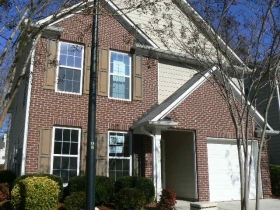
You have no doubt heard it said that cities with the fastest price appreciation are now the cities with the greatest deflation in home prices.  This holds true for many of the cities in the list below.  For example, Atlanta, GA “led the nation in new construction during the 10 year run-up before the bubble burst;” according to a newly released report by Deutsche Bank.  Atlanta, Georgia now has the “most affordable homes in America.”
Huge Advantages to Purchase vs. Rent

The study shows Atlantans who rent are now paying 151 % more per month than they could be paying if they purchased the equivalent property.  The median home price in Atlanta declined by 33% during the 2006-2010 housing crisis.  February 2011 sales indicate an additional 14% price drop versus the previous year.

Top 10 Best Cities for Homebuyers

1.      Atlanta, GA

2.      Orlando, FL

3.      Rochester, NY

4.      Cleveland, OH

5.      Tampa-St. Petersburg, FL

6.      Las Vegas, NV

7.      Jacksonville, FL

8.      St. Louis, MO

9.      Buffalo, NY

10.   Memphis, TN

Quality Report

There are many “Top 10” reports that leave us scratching our heads, but this report provides thorough documentation on how each city earned its spot on the list.  It also assesses how much money is being “left on the table” by those who choose to ‘rent vs. buy’ in each market.  This is a great time to ensure the rent versus buy statistics are part of our marketing efforts.

HUD-Owned Home Perks

Remember that qualified FHA borrowers (owner occupants) can close with only 3.5% down. Better still, some markets feature the “$100 Down Payment” program.  Ask your real estate professional for details. And last but not least, most FHA mortgages are assumable loans—which can be a huge future selling advantage if interest rates continue to climb. Check with your Lender for details.

Visit our website for more information about available properties or about buying and selling affordable homes.

Fannie Mae’s Energy Improvement Program

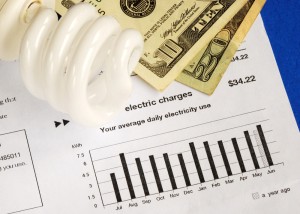
While it’s no secret that gas prices have escalated, less has been said about escalating housing costs in the form of high utility bills.  If you have wished for a way to reduce monthly energy bills — a new Fannie Mae energy improvement mortgage add-on program may be the answer you’ve been looking for.

Fannie Mae’s new energy improvement feature can be used to make energy improvements to existing homes. For qualified applicants, instead of offering a separate loan/mortgage for energy upgrades or retrofits alone, Fannie Mae’s new program  feature allows the upgrade of an existing home through a purchase or re-finance mortgage at current interest rates. It alleviates the need for two separate mortgages/loans.  The principal can be repaid with the energy savings generated by the improvements.

It folds the cost of the improvements capped at up to 10 percent of the estimated market value of the home– following the energy efficiency enhancements—into the mortgage amount itself. The new program is available through participating lenders across the country.  The program requires an energy audit by a certified Home Energy Rating Systems (HERS) specialist.  The audit is to ensure that the proposed energy upgrades are legitimate and truly cost-justifiable.

The features of the new Fannie Mae product are:

The financing of energy improvements found by a RESNET Home Energy Rating to be cost-effective of up to 10% of the as-completed appraisal.  This amount is subject to standard Fannie Mae LTV, CLV and HCLTV ratios.

  • The cost of the home energy rating can be included as the cost of the energy improvements.
  • Appraisers will be responsible to determine the as-completed value of the home based upon the energy improvements that were made.
  • Appraisers will also be responsible for verification that the energy improvements being financed were completed.
  • Only single family homes qualify.
  • Manufactured houses and cooperative units are not eligible.


HUD’S “PowerSaver Program” Makes Energy Upgrades Affordable

The U.S. Department of Housing & Urban Development (HUD) Secretary Shaun Donovan has announced a new energy upgrade program that offers creditworthy borrowers low-cost loans to finance energy improvements on
homes. The loans will be backed by the Federal Housing Administration (FHA). Under the program, qualified borrowers will be able to finance up to $25,000 in energy efficiency upgrades on a primary residence.
Energy Mortgages – The New Thing is Going GreenEnergy Cost
The announcement highlights the emergence of a new category of mortgage loans, referred to as ‘Energy Mortgages.’ Other major governmental entities have launched their own versions of ‘energy mortgages.’ Some target existing primary residences; others are for homes about to be purchased as primary residences. HUD’s program applies only to principal residences that are detached and single-family homes. PowerSaver offers preferential terms and “most participating lenders are expected to encourage owners to sign up for an energy efficiency analysis by a certified specialist.” The energy audit should help to document the projected amount of potential monthly savings.
More Details
The ‘energy audit’ should demonstrate a potential monthly energy savings sufficient to repay the amount of the loan. Borrowers must demonstrate creditworthiness. Qualifications include a minimum FICO score of “660,” and a debt-to-income ratio below 45 percent. Interest rates are currently between 5 percent and 7 percent, with up to a 20-year repayment period.
Positive Impact
It is estimated that the program will assist 30,000 homeowners and create 3,000 jobs. Many qualifying homeowners may see this as great way to lower energy bills and repay the loan with the savings earned.
Approved Lenders
Eighteen lenders have been selected to participate in the FHA “PowerSaver” pilot program. Click here for a FHA’s “PowerSaver” fact sheet.

Accelerate Your Business By Successfully Selling HUD Homes!

Are you interested in ramping up your business in 2011? The Federal Housing Administration (HUD) has one of the largest portfolios of affordable housing in the country. For savvy Realtors®, this represents a tremendous opportunity.
Join us for a FREE SEMINAR entitled “Successfully Selling HUD Homes.” Come and learn how to accelerate and re-energize your business while “Getting America’s Homeownership Back on the Road”.  The seminar will be held on Sunday, June 12, 2011 at the Omni Hotel in downtown Fort Worth, Texas. Registration for the REO course precedes this year’s REO- Expo, which begins June, 13. Attending the Expo is not required for “Successfully Selling HUD Homes” registration and attendance. The workshop will be hosted by HomeTelos and taught by nationally recognized instructor Margo McKay- Broughton, who has trained over 50,000 agents in 26 states. The course is comprehensive and will highlight latest updates from HUD and HomeTelos, HUD’s Asset Manager Contractor.
Join us for a high-energy, interactive seminar that can help to propel your business to the next level. Limited seating so register today! While attendance at REO Expo is not required to participate in this training, the planners of the conference have agreed to extend a $100 early registration discount until Tuesday, May 10th to those who do choose to attend. To get this discount, please use code HWFP when registering for the Expo.